Banking Issues in Focus provides an in-depth analysis of topical banking issues. These articles range from timely analysis of economic and banking trends at the national and regional level that may affect the risk exposure of FDIC-insured institutions to research on issues affecting the banking system and the development of regulatory policy.
In the past, these articles were featured in FDIC Quarterly Volumes.
Recent Articles
Bank Lending to Nondepository Financial Institutions
By Kathryn Fritzdixon and Joycelyn Lu (2026)
Bank lending to nondepository financial institutions (NDFIs) has been the fastest-growing loan segment since the 2008-2009 Global Financial Crisis. From 2010 to 2024, outstanding balances of bank loans to NDFIs, reported quarterly on bank Consolidated Reports of Condition and Income (Call Reports), rose at a compound annual growth rate of 21.9 percent, almost three times as high as the next-fastest-growing segment. Starting in December 2024, bank regulatory agencies added additional fields to the Call Report to disaggregate bank loans to NDFIs and to collect data on unfunded commitments and performance.1 This article discusses the growth of bank lending to NDFIs and bank connections to these lenders, explains recent changes to the Call Report and trends in bank lending to NDFIs gleaned from third quarter 2025 Call Report data, and discusses the growth of NDFIs.

2023 Summary of Deposits Highlights
By Michael Hoffman, Camille Keith, Joycelyn Lu and LaShawn Reed-Butler (2024)
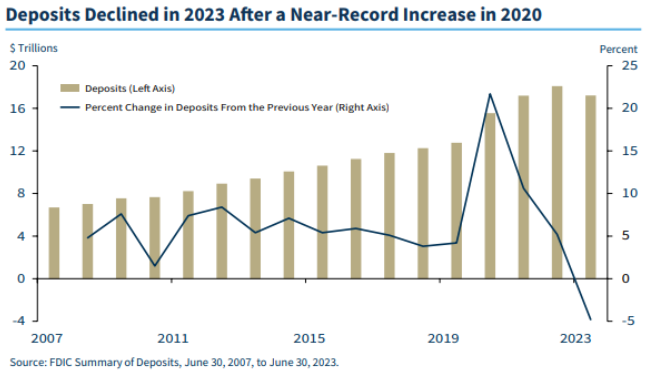
The 2023 Summary of Deposits article evaluates deposit and office trends by bank asset size group, community and noncommunity bank designation, and county type. Responses from the 2023 Summary of Deposits survey showed deposit declines of 4.8 percent between June 2022 and June 2023, the first annual decline in nearly 30 years. Deposit declines were greatest at large banks, while community banks reported deposit growth. The survey also showed the office closure rate improved from a year earlier, and community banks opened offices in metropolitan, micropolitan, and rural counties.
U.S. Industrial Transition and Its Effect on Metro Areas and Community Banks
By John M. Anderlik, J. Will Greene, Kathy Kalser, Eric Robbins, Scott Schweser and Brian L. Webb (2024)
The Effects of Population Change on Community Bank Deposits and Loans
By Jared Rothman (2023)
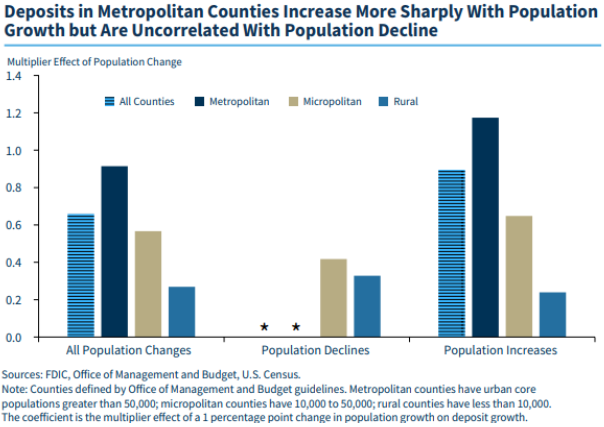
For decades, U.S. rural county population generally declined while metropolitan county population grew robustly. The 2020 pandemic disrupted these trends, with potentially significant implications for community banks. Based on pre-pandemic data, community bank deposit growth correlated strongly with population growth. However, deposit growth kept pace with population in micropolitan counties but lagged in micropolitan and rural counties. The response of community bank loan portfolios to population growth also displayed different patterns among county types. Commercial real estate loan shares rose and residential loan shares fell, but at different rates. Commercial and industrial loan shares rose only in micropolitan counties. Agricultural loan shares rose only in metropolitan counties. If new population patterns persist, these relationships may materially affect the business models of community banks.
Implications of High Inflation for Banking Outcomes and Deposit Flows: Observations from 2021 to 2022 and the 1970s
By Kathryn Fritzdixon (2023)
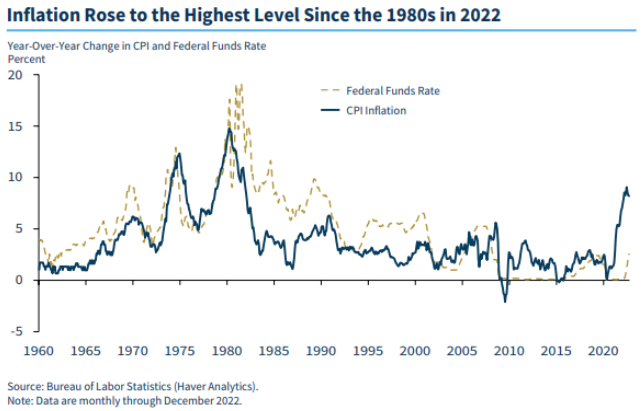
Persistently high inflation can affect banks in various ways as monetary policy tightening and macroeconomic changes occur. This article compares lending and bank performance during the stagflation periods of the 1970s and recent high inflation with a focus on the effects on deposits. Robust deposit growth in the 1970s suggests that banks were actively seeking deposits, while in 2021 to 2022, banks generally were flush with deposits as a result of varying pandemic support programs. The differences between the two periods illustrate the importance of considering broader macroeconomic conditions when analyzing the effects of inflation on banks.